

The traceability registry behind recycled materials
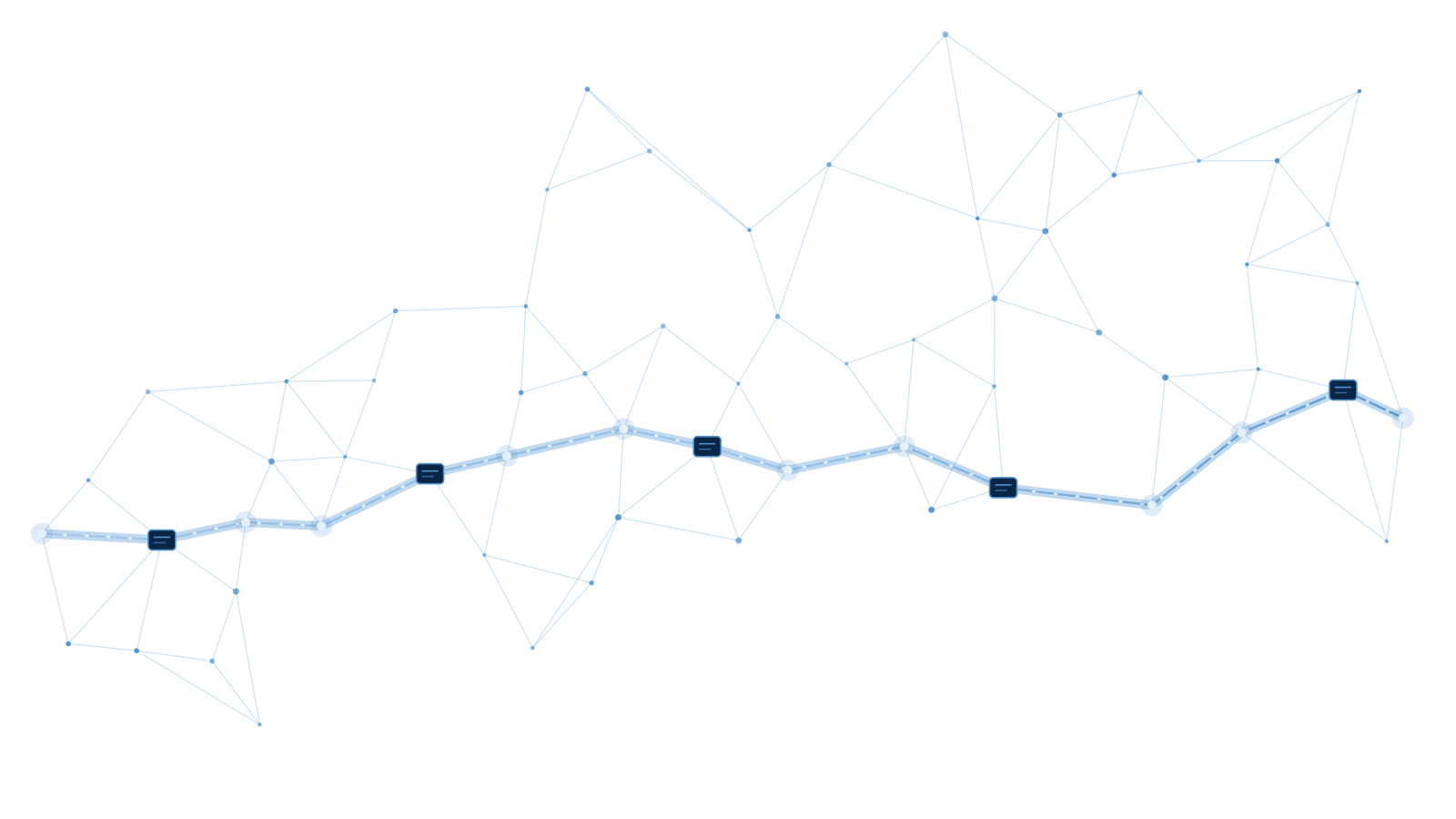
Orbex connects certificates of origin with downstream transaction certificates in a recycled materials registry recorded on the Hedera public ledger. ERP, scale ticketing and inventory integrations bring operating data into audit-ready loads. Procurement and compliance teams work from material records that carry origin, embedded emissions and recycled content through the full shipment history.

One certificate. The whole supply chain works from it.
Metals recyclers certify it as ARCOs, mills and OEMs buy against it, assurance partners verify it, and the Orbex registry keeps it on the Hedera public ledger. Every party sees the same certified record, with permissions set by role. Every data load is reconciled against the recycler's own file and ships with an audit workbook.
One certificate record
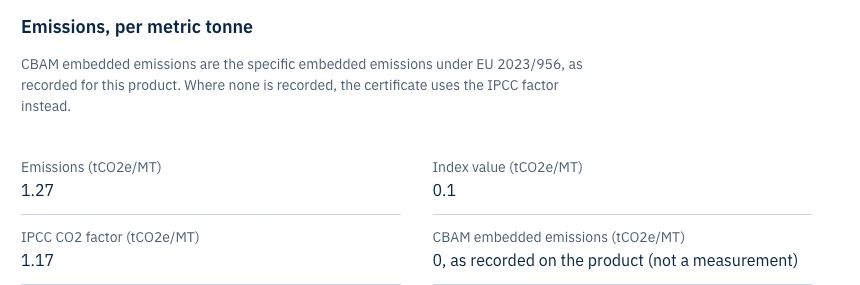
Emissions per tonne sit in the certificate of origin record on the Orbex platform, beside the material and its certification.
Integrates with your ERP and the systems you already run
Orbex connects to the software across the recycled-metal supply chain. Certificates come from the data you already capture, and the evidence lands where your teams report.
Where data starts
- Recycler management and scale ticketingWeight tickets, grades and loads become certificates of origin.1
- ERP and inventory management (ERP, WMS)Shipments, receipts and inventory records link to transaction certificates.2
- Commodity trading and risk management (CTRM)Contracts and shipments for ferrous and non-ferrous scrap.3
Orbex registry
- Certificates of origin
- Transaction certificates, each linked to its certificate of origin
- Recorded on the Hedera public ledger
Where evidence lands
- Automotive supplier compliance (IMDS, material declarations, PPAP)Recycled content and origin data for OEM submissions.
- GHG accounting and ESG reporting platformsScope 3 Category 1 primary data and CSRD reporting data.
- CBAM reporting toolsScrap input evidence for installation operators and authorised CBAM declarants.
- Digital product passport platformsOrigin and recycled-content records, keyed to the certificate of origin.
- Weight tickets, grades and loads become certificates of origin.
- Shipments and receipts link to transaction certificates.
- Contracts and shipments for ferrous and non-ferrous scrap carry their certificates.
- The evidence goes to the compliance and reporting systems your teams use.
Connect via API or EDI.
What one certificate of origin carries
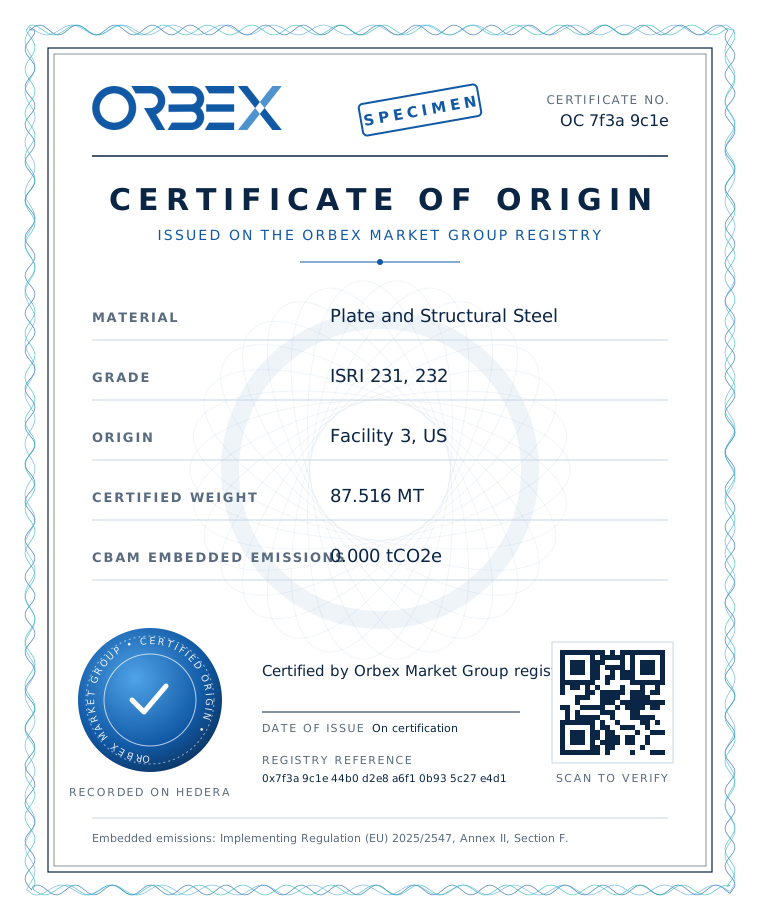 12345
- 1
Material
Identifies the recycled metal, the starting point for a CBAM declarant assessing iron, steel or aluminium.
- 2
ISRI grade
A defined scrap classification an auditor compares with procurement and shipment records.
- 3
Weight
The recorded quantity a Scope 3 team reads alongside embedded emissions.
- 4
Origin location
The recorded place of origin an auditor checks against supply chain evidence.
- 5
Embedded emissions
Material-specific emissions data for the CBAM declaration.
- 6
Recycled content
A documented attribute to compare with recycled content claims and procurement requirements.
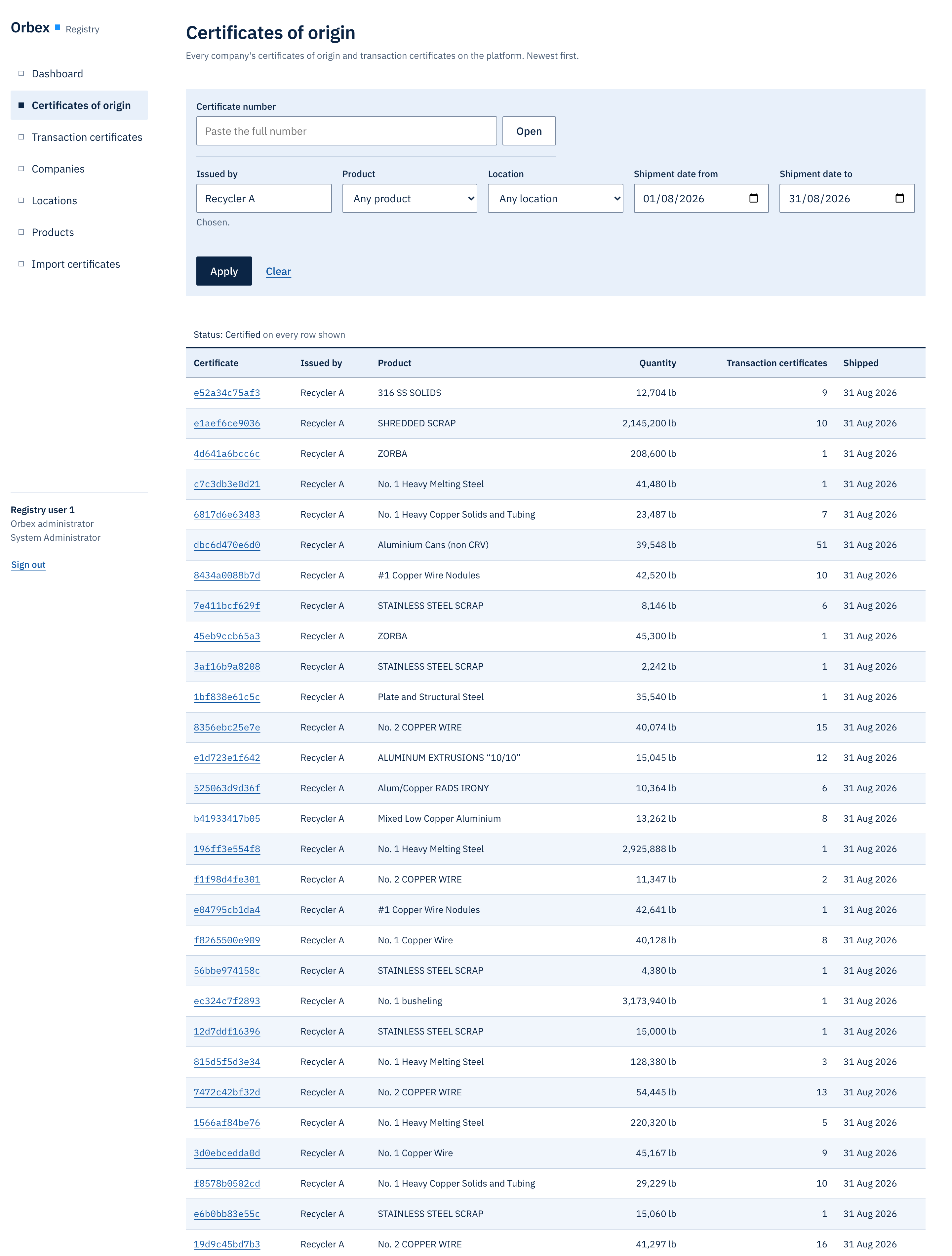
The metals recycler's certificate register
Each certificate of origin sits on one row: its product, its weight, its ship date and its number of transaction certificates.

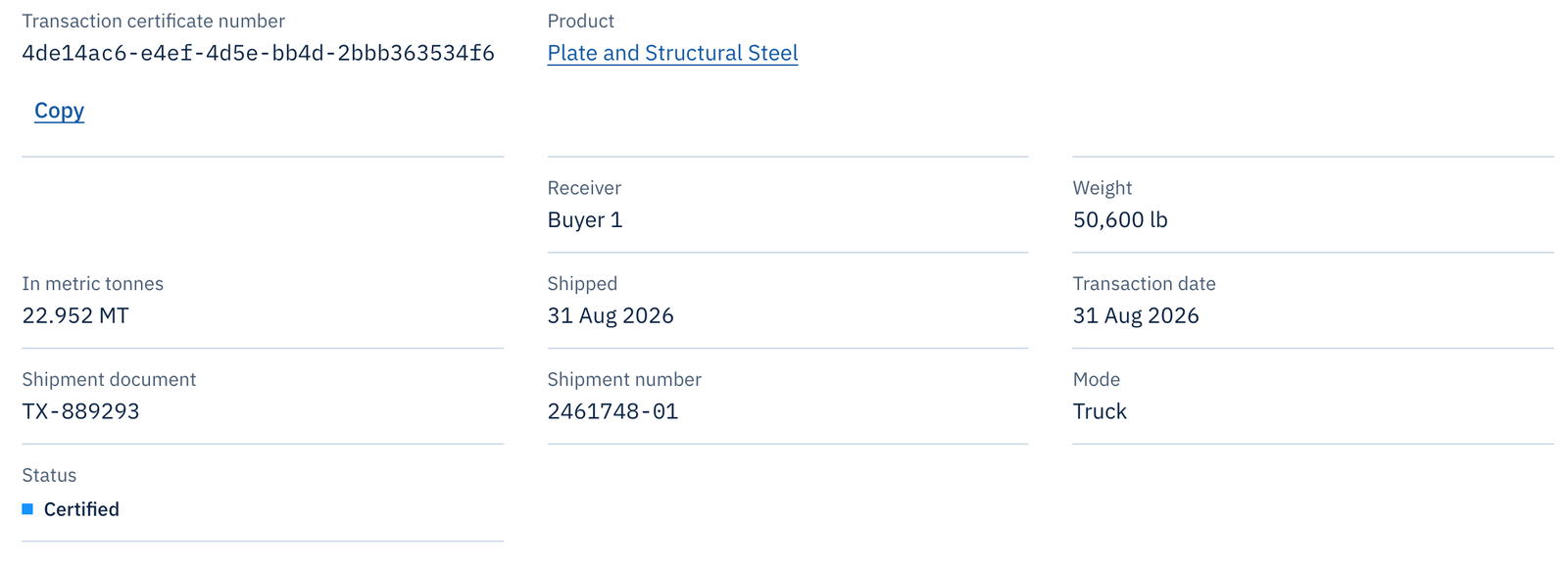
Transaction certificates
Each shipment gets a transaction certificate naming the receiver, the weight and the ship date, linked to its certificate of origin.

Partner platforms build on the Orbex registry
Partner platforms connect to the Orbex registry through its API. A maritime sustainability platform reserves environmental attribute certificates from its Orbex holding account, retires them with serial-numbered records, and receives signed webhooks the moment each retirement lands. Sandbox keys, an OpenAPI specification and idempotent calls let partners go live fast.
- Sandbox and API keys
- OpenAPI specification
- Serial-numbered retirements
- Signed webhooks
Trace the material. Follow the evidence.
The certificate of origin a recycler certifies is the record its buyer traces back to and its assurance partner verifies. Each certificate is timestamped and recorded on the Hedera public ledger, outside Orbex's own systems, and the record is audit-ready for a buyer's auditor.
Get audit-ready recycled-materials data
Contact Orbex